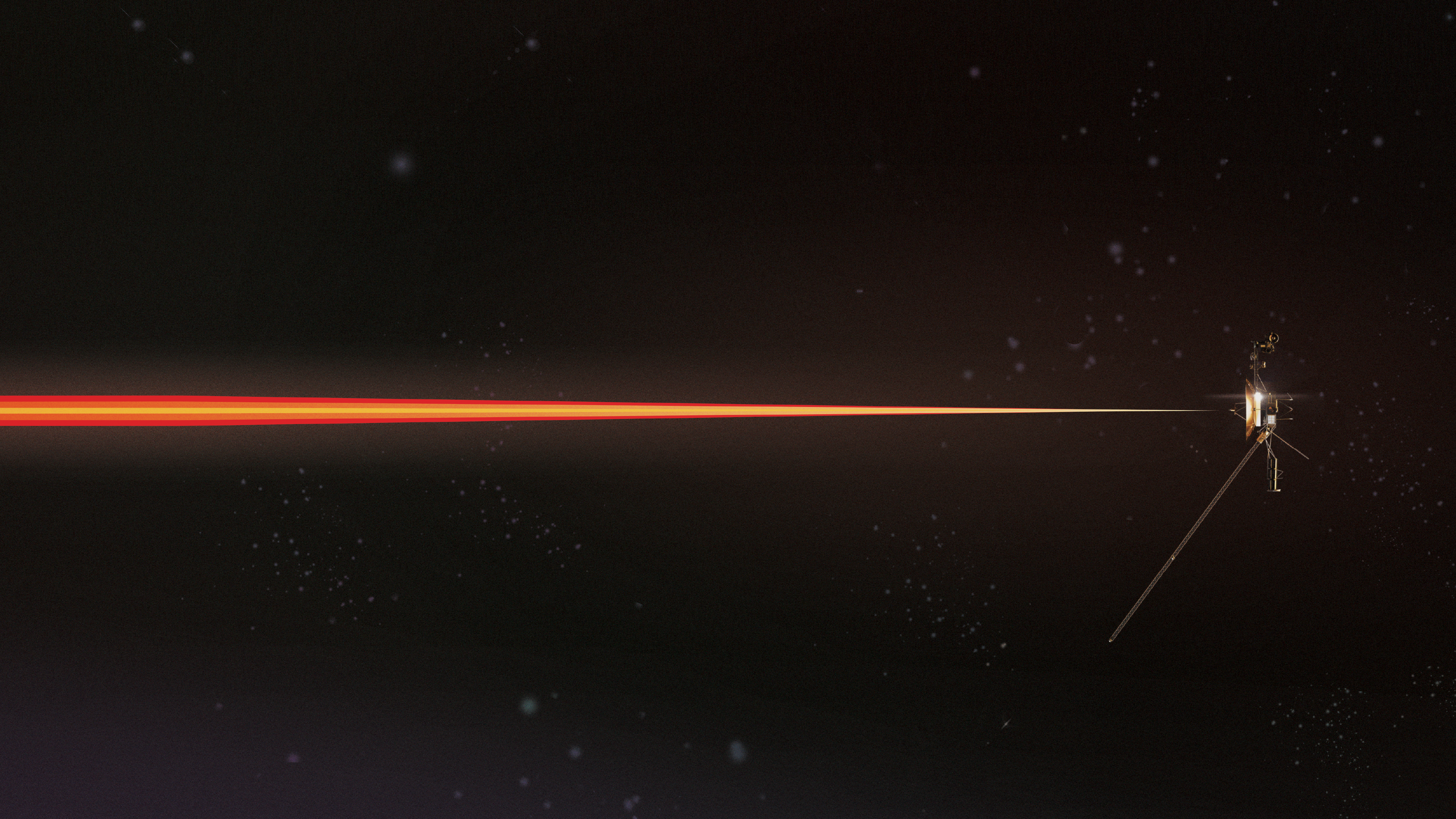
NASA's Voyager 1 spacecraft has achieved a remarkable feat, reaching one light-day from Earth. This milestone was confirmed on November 18, 2026, after the spacecraft traveled for over 49 years. A light-day is the distance light travels in 24 hours, equivalent to approximately 16.1 billion miles (25.9 billion kilometers). The Voyager team at NASA's Jet Propulsion Laboratory in California received the confirmation 24 hours later, when the spacecraft's radio signal, traveling at the speed of light, reached Earth. The Voyager mission has made significant contributions to planetary science, particularly with its Grand Tour of the outer planets. The spacecraft has also played a crucial role in NASA's fleet of heliophysics missions, providing valuable insights into the Sun. Scientists use light to measure vast distances in space, and Voyager 1's achievement demonstrates the incredible progress made in space exploration. The spacecraft is still sending a carrier signal, which conveys data to Earth, although the team has not received science and engineering data since November 14. Mission engineers used the carrier signal and trajectory calculations to confirm the light-day milestone. They continue to analyze the issue affecting the science and engineering data. Voyager 1 is humanity's only probe in interstellar space, and its journey continues to inspire and advance our understanding of the universe.
Science
NASA’s Voyager 1 Makes History Reaching One Light-Day From Earth
Prepared with AI assistance; not independently fact-checked. Original source: NASA