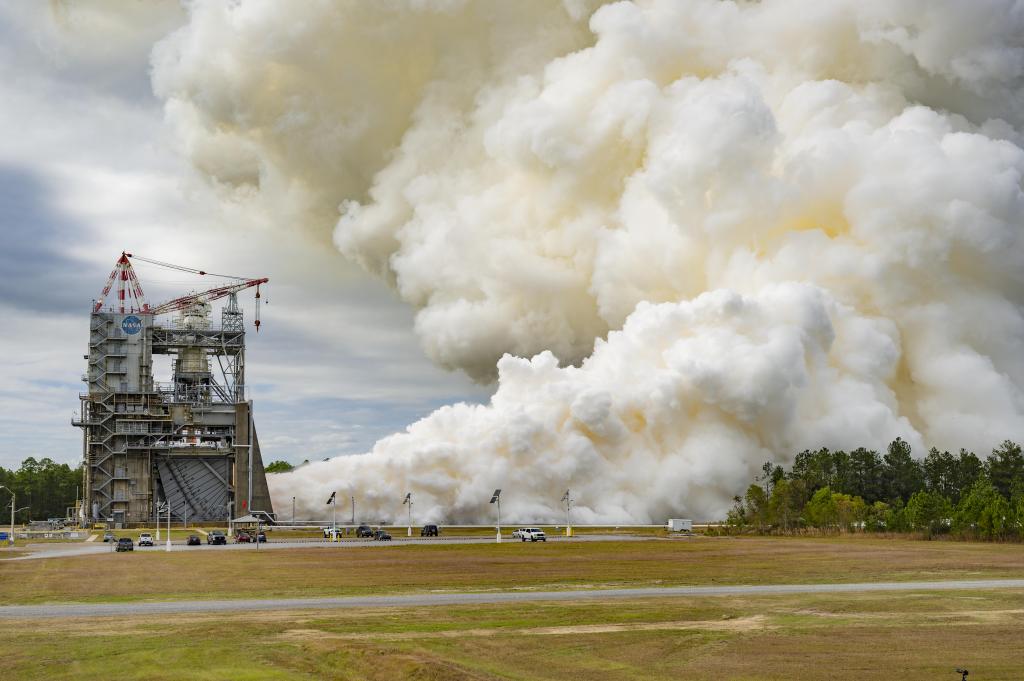
NASA has successfully conducted a hot fire test of the RS-25 engine, a critical component of the Space Launch System (SLS) rocket that will power the Artemis missions to the Moon. The test, which took place on November 18, 2026, at the Stennis Space Center in Mississippi, involved firing the developmental engine for the planned duration of three minutes and 20 seconds. Although the engine itself will not be used in flight, the test provided valuable data to improve engine performance and reliability for future missions. The Artemis IV mission, scheduled for 2028, will mark a significant milestone in NASA's plans to explore the lunar South Pole and establish a sustainable human presence on the Moon. The SLS rocket, powered by four RS-25 engines, will launch astronauts aboard the Orion spacecraft from Kennedy Space Center in Florida. The successful test is a crucial step towards achieving NASA's broader goals, including sending the first crewed mission to Mars. The test was conducted by a team of operators from NASA, L3Harris, and Nova Space Solutions, demonstrating the collaborative effort required for such complex space missions. The RS-25 engine's performance and reliability are essential for the success of the Artemis missions, and this test will help ensure that the engines are ready for use in future flights. The data collected during the test will be used to make improvements to the engine, further enhancing its capabilities and paving the way for future space exploration.
Technology
NASA Conducts Latest RS-25 Engine Test in Support of Future Artemis Missions
Prepared with AI assistance; not independently fact-checked. Original source: NASA