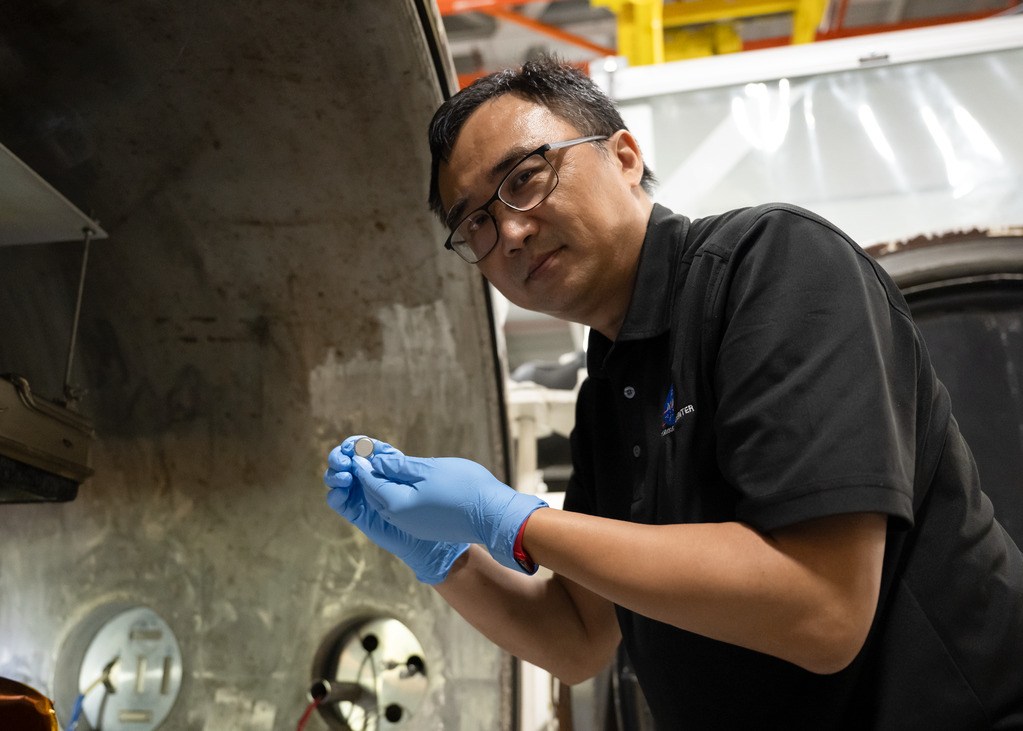
NASA researchers are working on a new battery technology, called SPEARS, designed to power future lunar missions. The batteries will need to operate reliably and safely in the harsh environment of the Moon's South Pole, where temperatures drop to minus 328 degrees Fahrenheit. The team is developing solid-state batteries that don't rely on liquid electrolytes, which can freeze in extreme cold. This innovation could provide a crucial tool for NASA's Artemis campaign, enabling a sustained human presence on the Moon. The batteries will be used to power everything from emergency kits to rovers exploring the Moon's craters. The project's principal investigator, Donald Dornbusch, emphasizes the importance of reliable and safe power sources for lunar missions. The SPEARS team is led by NASA's Glenn Research Center in Cleveland, and the project is a significant step towards making human exploration of the Moon a reality. The new batteries are being tested in thermal vacuum conditions to ensure they can withstand the extreme temperatures. The development of these batteries is a crucial step towards establishing a sustainable human presence on the Moon.
Technology
NASA Develops Batteries to Power Humanity’s Return to Moon
Prepared with AI assistance; not independently fact-checked. Original source: NASA Technology